

FESTE ABSPERRUNG
EINE FESTE ABSPERRUNG
ZWISCHEN MENSCHEN
UND FAHRENDEN ZÜGEN.
Feste Absperrungen werden bei Gleisarbeiten eingesetzt, um eine klare Trennung zwischen Arbeitsbereich und Bahnbetrieb zu schaffen. Sie verhindern, dass Beschäftigte unbeabsichtigt in den Gefahrenbereich gelangen, während auf dem Nachbargleis weiterhin Zugverkehr stattfindet.
Im Gegensatz zu einer rein optischen Kennzeichnung schafft eine Feste Absperrung eine durchgehende, sichtbare und physische Trennung zwischen Beschäftigten und dem Bahnbetrieb. So entsteht ein klar abgegrenzter Arbeitsbereich für Instandhaltung, Inspektionen, Gleiserneuerungen und Bauarbeiten an Betriebsgleisen.
Safetech Fence ist das modulare Gleisabsperrsystem von Rail Safety Constructions für temporäre Arbeiten neben befahrenen Gleisen. Das System wurde speziell für den schnellen und sicheren Einsatz im Gleisbereich entwickelt.
Die Montage erfolgt ohne Eingriff in den Oberbau und ohne Schotterbewegung. Nach Abschluss der Arbeiten kann die Feste Absperrung schnell demontiert und erneut eingesetzt werden. Safetech Fence ist mit mechanischer oder magnetischer Schienenbefestigung erhältlich und damit für unterschiedliche Gleisinfrastrukturen und Gleiskonfigurationen geeignet.

INSTANDHALTUNG & INSPEKTIONEN
Temporäre Feste Absperrung für Wartungs-, Inspektions- und technische Arbeiten neben befahrenen Gleisen.
GLEISERNEUERUNG
Sichere Trennung des Arbeitsbereichs vom Bahnbetrieb bei Gleiserneuerungen und Umbauarbeiten
GLEIS- & INFRASTRUKTURBAU
Klare Trennung von Arbeitsbereich und Bahnbetrieb bei Bauarbeiten an der Schieneninfrastruktur.
KURZZEITIGE GLEISARBEITEN
Schnell montierbare Gleisabsperrung für kurze Einsätze, bei denen Montagezeit und Arbeiten im Gleisbereich minimiert werden müssen.
EIN ZIEL. ZWEI KOMPLETTE SYSTEME.
ENTWICKELT FÜR UNTERSCHIEDLICHE GLEISINFRASTRUKTUREN.
Schienennetze nutzen unterschiedliche Schienenbefestigungssysteme. Deshalb ist Safetech Fence in zwei Ausführungen erhältlich: mechanisch und magnetisch.
MECHANISCHE FESTE ABSPERRUNG
Eine bewährte und wirtschaftliche Feste Absperrung für Gleise mit kompatiblen Schienenbefestigungssystemen.
Safetech Fence Mechanical wird direkt an der vorhandenen Schienenbefestigung montiert. Das System kommt ohne Eingriff in den Oberbau und ohne Schotterbewegung aus und ermöglicht eine schnelle Montage vollständig von einer Gleisseite.

Wirtschaftliches System
Von Deutsche Bahn ausgewählt
3-jähriger Rahmenvertrag
Kein Eingriff in den Oberbau
Keine Schotterbewegung
Schnelle einseitige Montage
Compatibility & application
Fastening systems
ESTABLISHED APPLICATIONS
Netherlands
Germany
Czech Republic
Poland
The Baltics
EN 16704-2-2 certified | Patented system
MAGNETISCHE FESTE ABSPERRUNG
Eine universell einsetzbare Feste Absperrung, unabhängig vom vorhandenen Schienenbefestigungssystem.
Safetech Fence Magnetic wird mittels magnetischer Befestigung direkt am Schienensteg montiert. Dadurch ist das System unabhängig von der vorhandenen Schienenbefestigung – ohne Eingriff in den Oberbau und ohne Schotterbewegung.

Unabhängig vom Schienenbefestigungssystem
Direkte magnetische Befestigung am Schienensteg
Für den internationalen Einsatz entwickelt
Kein Eingriff in den Oberbau
Keine Schotterbewegung
Schnelle einseitige Montage
Compatibility & application
Rail attachment
Direct attachment to the rail web, independent of the rail fastening system.
UNIVERSAL APPLICATION
Designed for international use across different rail networks, independent of sleeper type and rail fastening system
EN 16704-2-2 certified | Patented system
Assembly & disassembly
Safetech Fence is a temporary physical railway safety barrier that can be installed and removed entirely from one side of the track, without digging or disturbing the ballast.
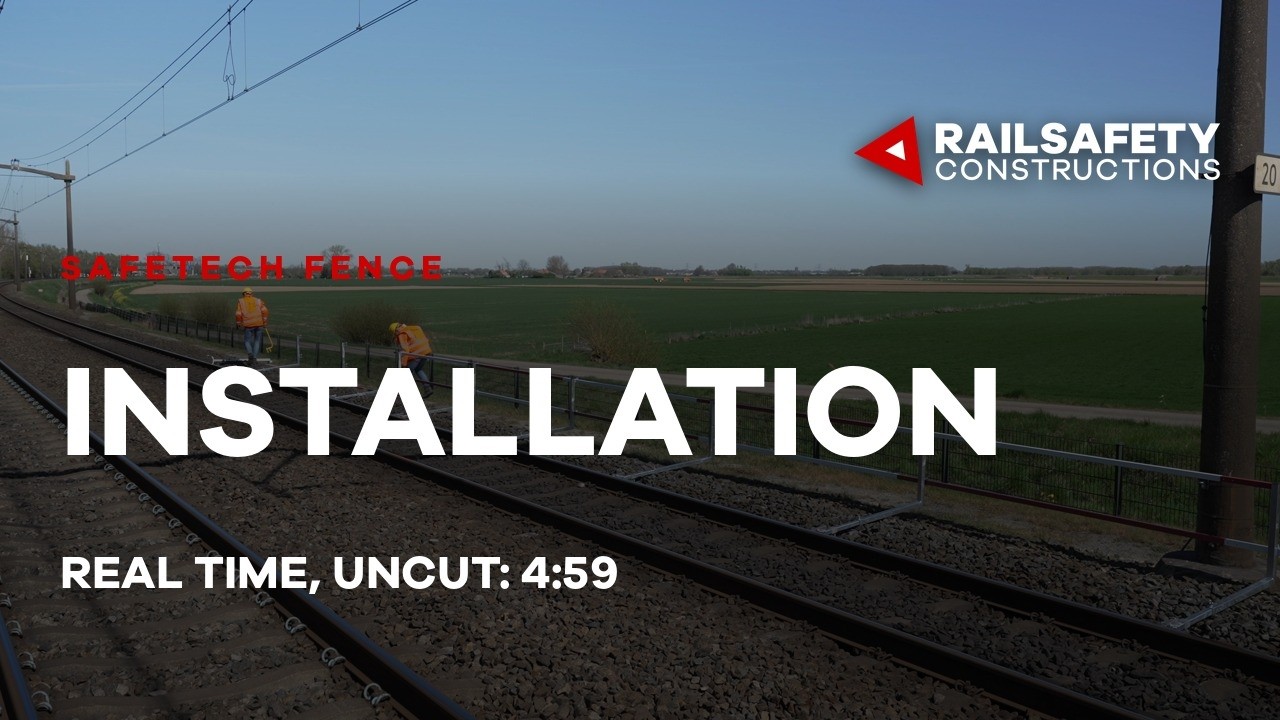
A complete installation of 51 metres of the Mechanical Safetech Fence by two people in 4:59, filmed alongside live track in real time with nothing cut or sped up.
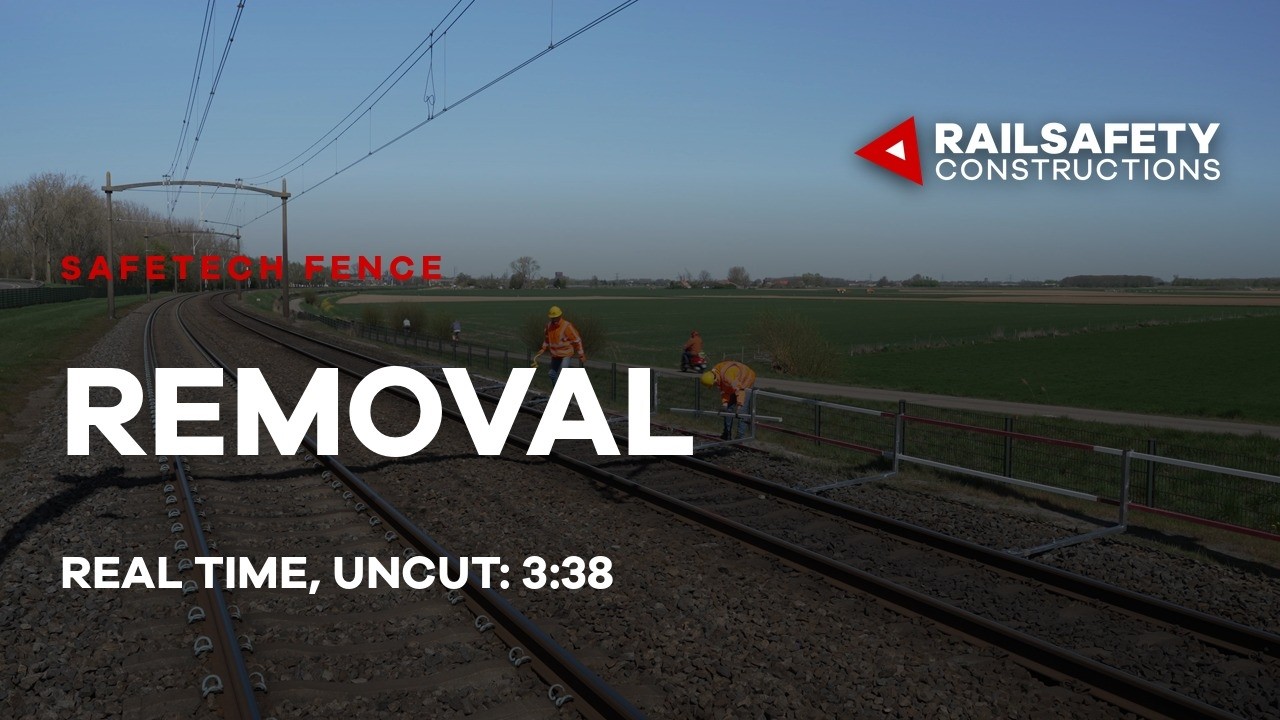
A complete removal of 51 metres of the Mechanical Safetech Fence by two people in 3:38, filmed alongside live track in real time with nothing cut or sped up.
Rail profile compatibility
Safetech Fence is suitable for most common European Vignole rail profiles and other flat-bottomed rail applications.
For both systems
Mechanical & magnetic
49E1
S49
54E1
UIC54
54E2
UIC54E
54E3
S54
56E1
BS113A
60E1/E2
UIC60
Other rail profiles and track configurations can be assessed on request. See the full list of compatible rail profiles.
Accessories & special solutions
Complete the system using accessories and special solutions for switches, increased barrier heights, transport and handling.
Special track solutions

Switch stanchion
Adjustable Safetech Fence stanchion for switches and complex track configurations.
Flexible positioning allows the physical barrier to continue through different switch and track geometries.

Height extension
Adjustable height extension for increasing the Safetech Fence barrier height by 450–600 mm.
Mounts directly onto the standard Safetech Fence stanchion for applications requiring additional barrier height.
Transport & handling

Stanchion transport rack
Safe and efficient transport and storage of Safetech Fence stanchions.

Beam transport rack
Safe and efficient transport and storage of Safetech Fence beams.

Track trolley
Rail trolley for efficient on-track transport of Safetech Fence racks and components.
Certificates & approvals
Documentation for both Safetech Fence systems.
Mechanical Safetech Fence
Certification
EN 16704-2-2 certificate
European standard for temporary safety fences on railways.
National approvals

Germany
DB Systemtechnik certification for the Safetech Fence mechanical railway safety barrier (Feste Absperrung), Certificate No. 20-58363-34.
Germany
Deutsche Bahn network approval for the Mechanical Safetech Fence (Feste Absperrung) for use on the German rail network.

Netherlands
railAlert product certification for the Safetech Fence physical railway safety barrier, certified by Aboma Rail for use as a workplace safety measure against collision risk.
Netherlands
DEKRA Rail certification for the Safetech Fence as a workplace safety device for use on the Dutch rail network.

Czech Republic
Official approval for the Safetech Fence mechanical railway safety barrier for use on the Czech railway network operated by Správa železnic.
Magnetic Safetech Fence
Certification
EN 16704-2-2 certificate
European standard for temporary safety fences on railways.
National approvals
Need documentation for a specific country or railway network?
Contact us for certificates, approvals and technical documentation.
Application is subject to applicable national regulations, infrastructure manager requirements and local approval or homologation.
Knowledge base
Frequently asked questions: Mechanical & Magnetic railway safety barriers.